
Digital marketing has changed the way businesses promote their products and services online. In the past, companies depended heavily on traditional advertising methods such as television commercials, newspaper ads, and billboards. However, with the rapid growth of the internet, businesses now rely on digital channels to reach their customers more effectively. One of the most powerful strategies used today is PPC in Digital Marketing.
Many businesses struggle to generate traffic through organic marketing strategies alone. Search engine optimization can take several months before a website begins to rank on the first page of search engines. This is where PPC in Digital Marketing becomes extremely useful. It allows businesses to display advertisements instantly to people who are actively searching for related products or services.
The concept of PPC in Digital Marketing is simple yet powerful. Advertisers pay a fee each time someone clicks on their advertisement. Instead of waiting for organic traffic, businesses can bring targeted visitors directly to their website through paid campaigns. Because of this performance-based model, PPC in Digital Marketing has become one of the most popular advertising methods used by companies around the world.
Understanding PPC in Digital Marketing is essential for students, marketers, freelancers, and business owners who want to build successful online marketing campaigns. In this complete guide, we will explore the meaning of PPC in Digital Marketing, how it works, the types of PPC campaigns, major platforms, strategies for success, common mistakes, and the future of paid advertising.
What is PPC in Digital Marketing?
To understand modern online advertising, it is important to understand the concept of PPC in Digital Marketing. PPC stands for Pay-Per-Click, which is a digital advertising model where advertisers pay only when users click on their ads.
In simple terms, PPC in Digital Marketing allows businesses to buy visits to their websites rather than earning those visits organically. The most common platform for PPC in Digital Marketing is Google Ads, where businesses bid on keywords that are relevant to their products or services.
For example, when someone searches for “best digital marketing course online,” several sponsored advertisements appear at the top of the search results. These advertisements are part of PPC in Digital Marketing campaigns run by companies targeting that keyword.
Every time a user clicks on one of these advertisements, the advertiser pays a small fee to the advertising platform. The cost per click depends on several factors including keyword competition, ad quality, and bidding strategy.
One of the biggest advantages of PPC in Digital Marketing is that it allows businesses to reach their potential customers exactly when they are searching for specific information. This makes PPC advertising highly targeted and effective compared to many traditional marketing strategies.
Why PPC is Important in Digital Marketing
There are several reasons why PPC in Digital Marketing has become an essential strategy for online businesses.
First, PPC in Digital Marketing provides immediate results. Unlike SEO, which requires months of optimization before showing results, PPC campaigns can start generating traffic within minutes of launching.
Second, PPC in Digital Marketing allows precise audience targeting. Advertisers can choose who sees their ads based on location, age, interests, device type, and search behavior.
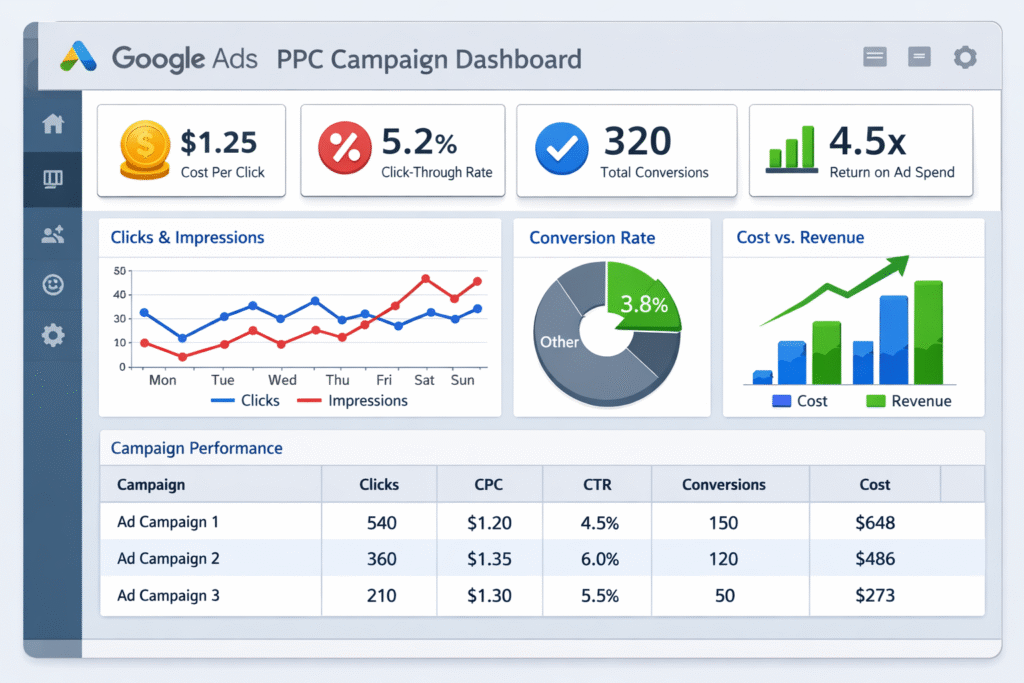
Third, PPC in Digital Marketing provides measurable results. Marketers can track every click, impression, conversion, and revenue generated by their campaigns.
Another reason why businesses rely on PPC in Digital Marketing is budget control. Advertisers can set daily budgets and adjust their spending according to campaign performance.
Because of these benefits, many companies use PPC in Digital Marketing as a key part of their overall marketing strategy.
How PPC Advertising Works
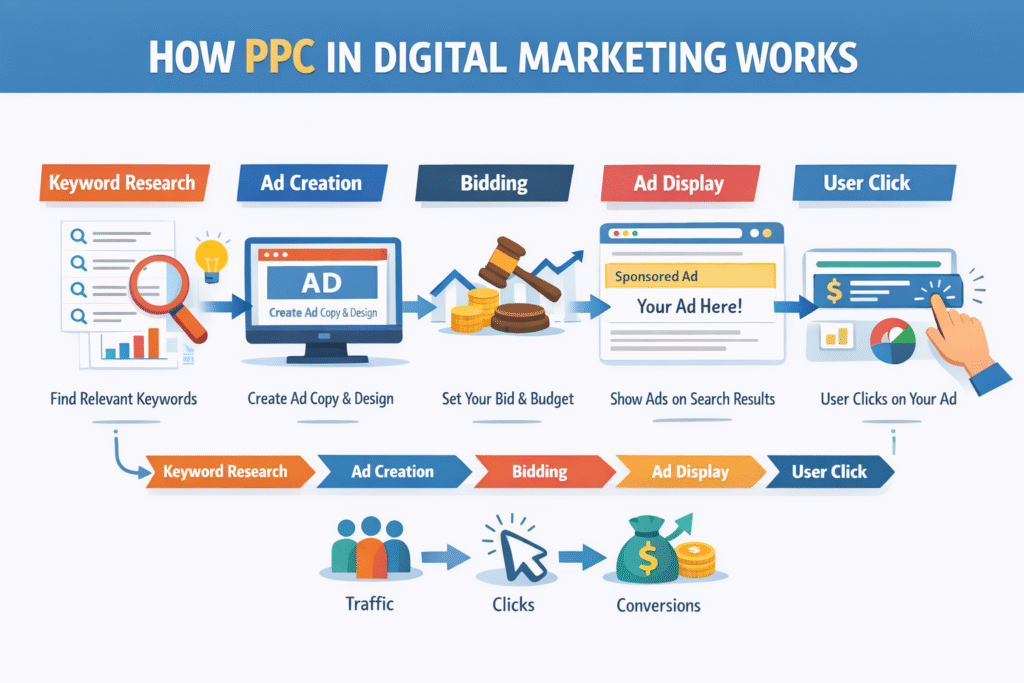
Understanding the working process of PPC in Digital Marketing helps businesses run more successful advertising campaigns.
Keyword Research
Keyword research is the first step in PPC in Digital Marketing. Advertisers identify keywords that potential customers are likely to search for when looking for products or services.
Examples of PPC keywords include:
• digital marketing course
• online SEO training
• social media marketing services
These keywords trigger advertisements when users search for them on search engines.
Choosing the right keywords is extremely important for successful PPC in Digital Marketing campaigns.
Ad Creation
After selecting keywords, advertisers create advertisements that will appear in search results or on websites. A typical ad used in PPC in Digital Marketing includes a headline, description, display URL, and a call-to-action.
The goal of the advertisement is to attract users and encourage them to click on the ad.
Ad Auction and Bidding
One of the most interesting aspects of PPC in Digital Marketing is the bidding system. Advertising platforms such as Google Ads run auctions whenever a user searches for a keyword.
Advertisers place bids on keywords they want to target. However, the highest bid does not always win. Search engines also evaluate ad quality and relevance before deciding which advertisement appears at the top.
Because of this system, PPC in Digital Marketing rewards advertisers who create relevant and high-quality advertisements.
Ad Display
After the auction process, advertisements are displayed on the search results page. Ads in PPC in Digital Marketing usually appear above organic search results and are labeled as sponsored content.
This placement gives PPC ads high visibility and increases the chances of attracting clicks.
Payment for Clicks
The final step in PPC in Digital Marketing is payment. Advertisers pay only when someone clicks on their ad.
This performance-based model ensures businesses pay only for real visitors rather than impressions.
Types of PPC Advertising
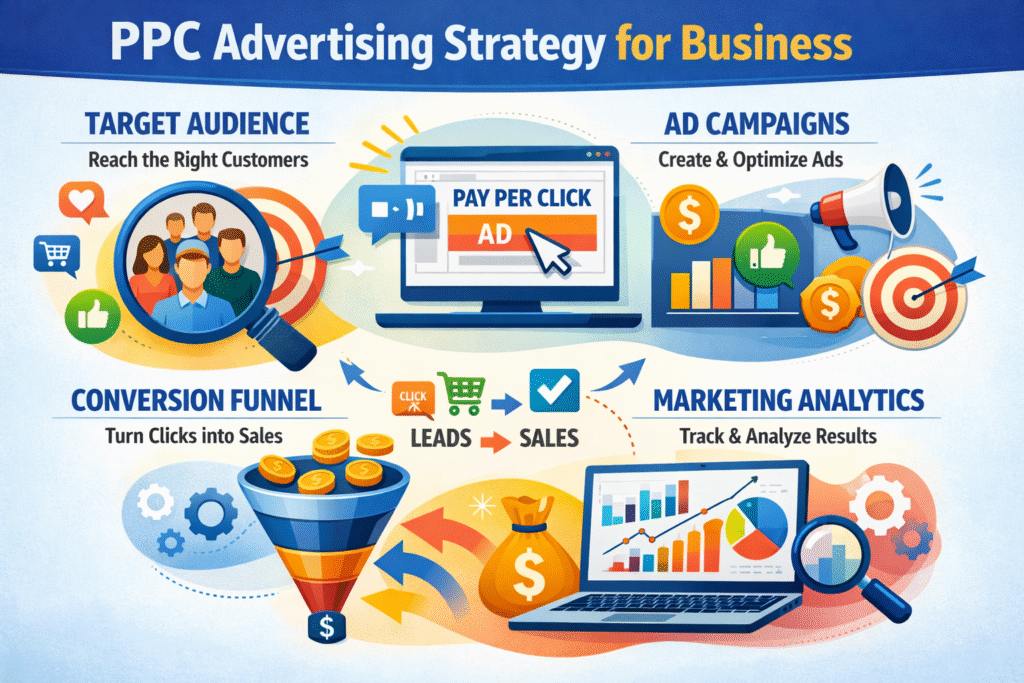
There are several types of campaigns used in PPC in Digital Marketing.
Search Advertising
Search ads appear on search engine results pages when users search for specific keywords. These ads are the most common type of PPC in Digital Marketing.
Display Advertising
Display advertising uses banner ads and images that appear on websites within advertising networks. Display campaigns are often used in PPC in Digital Marketing to increase brand awareness.
Social Media Advertising
Social media platforms also support PPC in Digital Marketing campaigns. Popular platforms include Facebook, Instagram, LinkedIn, and Twitter.
Shopping Ads
Shopping ads display product images, prices, and store names in search results. These ads are widely used in PPC in Digital Marketing for eCommerce businesses.
Video Advertising
Video ads on platforms such as YouTube are also a growing part of PPC in Digital Marketing.
Benefits of PPC in Digital Marketing
Businesses choose PPC in Digital Marketing because it provides several benefits.
Instant Traffic
PPC campaigns generate immediate website traffic.
Targeted Audience
PPC in Digital Marketing allows advertisers to reach specific audiences.
Measurable Results
Marketers can analyze campaign performance through detailed analytics.
Budget Flexibility
Advertisers can control spending and adjust budgets easily.
PPC vs SEO
Both SEO and PPC in Digital Marketing aim to drive traffic to websites, but they work differently.
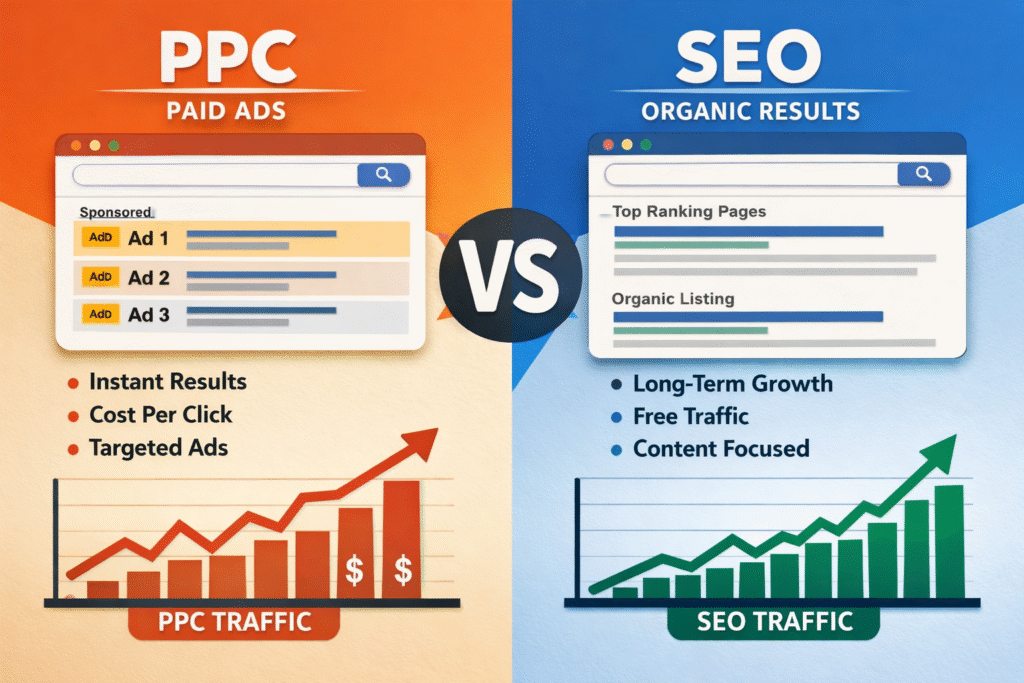
PPC delivers instant results but requires advertising budgets, while SEO focuses on organic traffic and long-term growth.
Many businesses combine SEO with PPC in Digital Marketing to achieve the best results.
Key Metrics in PPC Campaigns
Successful PPC in Digital Marketing campaigns depend on tracking performance metrics.
Important metrics include:
• Click-through rate
• Cost per click
• Conversion rate
• Return on ad spend
These metrics help marketers optimize their campaigns.
Tips for Successful PPC Campaigns
To succeed with PPC in Digital Marketing, businesses should follow several best practices.
• Conduct thorough keyword research
• Write engaging ad copy
• Use strong calls-to-action
• Optimize landing pages
• Monitor campaign data regularly
These strategies improve campaign performance.
Common PPC Mistakes to Avoid
Many beginners make mistakes while running PPC in Digital Marketing campaigns.
Common mistakes include targeting the wrong keywords, ignoring negative keywords, and failing to track conversions.
Avoiding these mistakes can significantly improve campaign performance.
Future of PPC in Digital Marketing
The future of PPC in Digital Marketing will be influenced by new technologies such as artificial intelligence, automation, and voice search.
Advertising platforms are increasingly using machine learning to optimize bids and targeting.
As technology continues to evolve, PPC in Digital Marketing will become even more sophisticated and effective.
Conclusion
In today’s competitive online marketplace, PPC in Digital Marketing has become one of the most powerful tools for driving targeted traffic and increasing sales. By allowing businesses to pay only when users click on their advertisements, PPC provides a cost-effective and measurable marketing strategy.
Platforms such as Google Ads, Facebook Ads, and LinkedIn Ads offer powerful tools for creating and managing PPC campaigns. When combined with proper keyword research, compelling ad copy, and optimized landing pages, PPC in Digital Marketing can deliver excellent results.
For beginners who want to build a career in digital marketing or grow their online businesses, learning PPC in Digital Marketing is an essential skill that can open many opportunities in the digital economy.
1. Google Ads Official Website
Anchor Text: Google Ads PPC advertising platform
Link: https://ads.google.com/
Example sentence:
Businesses use the Google Ads PPC advertising platform to create and manage pay-per-click campaigns.
2. Google Ads Help Center
Anchor Text: Google Ads campaign setup guide
Link: https://support.google.com/google-ads/
Example sentence:
Beginners can learn campaign creation from the Google Ads campaign setup guide.
3. Google Search Ads Guide
Anchor Text: Search ads advertising guide
Link: https://developers.google.com/search/docs/appearance/ads
Example sentence:
The search ads advertising guide explains how paid ads appear in search results.
4. HubSpot PPC Marketing Guide
Anchor Text: PPC marketing strategy guide
Link: https://blog.hubspot.com/marketing/ppc
Example sentence:
Marketers can improve their campaigns using this PPC marketing strategy guide.
5. WordStream PPC Guide
Anchor Text: complete PPC advertising guide
Link: https://www.wordstream.com/ppc
Example sentence:
This complete PPC advertising guide explains how pay-per-click marketing works.