
Digital marketing offers many ways to promote a brand online, but two of the most popular methods are Search Engine Optimization (SEO) and Social Media Marketing (SMM). Beginners often wonder which approach is better to start with. Both strategies help businesses attract customers, increase visibility, and generate sales, but they work in different ways.
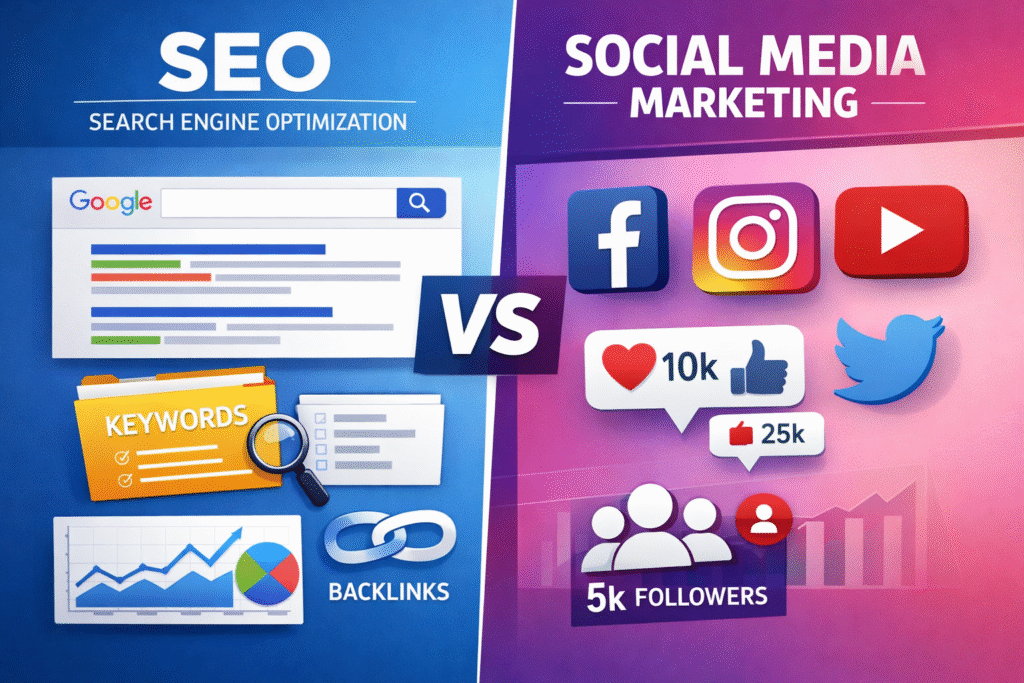
Understanding the differences between SEO vs Social Media Marketing is important before deciding which one to learn or implement first. Each strategy has its own advantages, costs, timelines, and long-term benefits.
In this detailed guide, we will explore how SEO and social media marketing work, their benefits, their limitations, and which option is best for beginners who want to start their digital marketing journey.
What is SEO?
Search Engine Optimization, commonly known as SEO, is the process of optimizing a website so it appears higher in search engine results pages (SERPs). When people search for information on Google, Bing, or other search engines, SEO helps websites appear among the top results.
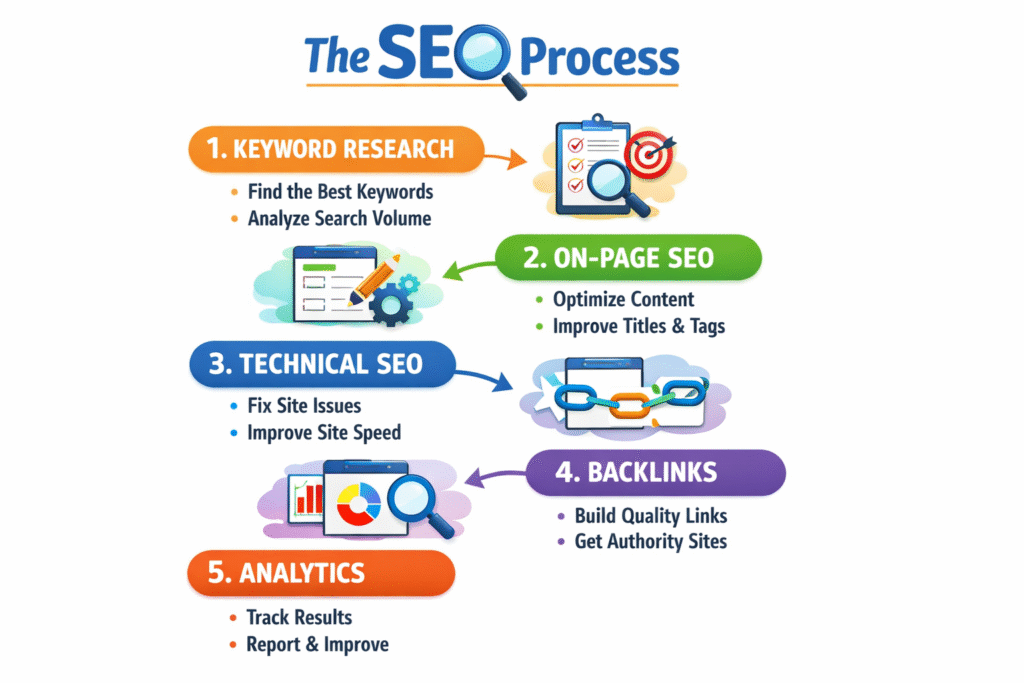
In the comparison of SEO vs Social Media Marketing, SEO focuses primarily on organic traffic. This means visitors come to a website through search engines rather than through paid advertisements or social media platforms.
SEO includes multiple activities, such as:
- Keyword research
- On-page optimization
- Technical SEO
- Content optimization
- Link building
- Website performance improvements
The main goal of SEO is to attract users who are actively searching for information, products, or services online.
For example, if someone searches for “digital marketing course for beginners,” a well-optimized website can appear on the first page of Google and attract visitors without paying for ads.
This ability to generate consistent traffic makes SEO a powerful long-term marketing strategy.
What is Social Media Marketing?
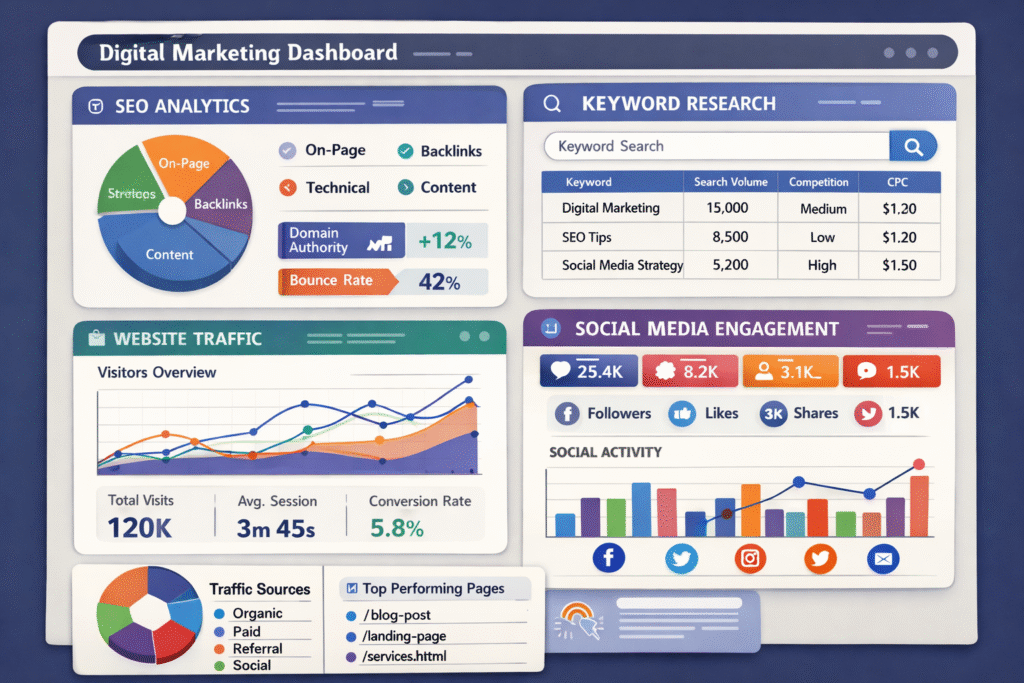
Social Media Marketing (SMM) involves promoting products, services, or brands on social media platforms such as Facebook, Instagram, LinkedIn, YouTube, and Twitter.
Unlike SEO, which focuses on search engines, social media marketing focuses on building relationships with audiences through content, engagement, and advertisements.
When discussing SEO vs Social Media Marketing, social media marketing is often associated with faster visibility and engagement.
Businesses use social media to:
- Share content and updates
- Promote products and services
- Engage with followers
- Run paid advertising campaigns
- Build brand awareness
For example, a company can create a promotional post on Instagram or run a Facebook advertisement to reach thousands of users within hours.
This makes social media marketing an effective strategy for quick exposure and audience interaction.
SEO vs Social Media Marketing: Key Differences
Although both strategies are part of digital marketing, they operate in different ways. Understanding their differences helps beginners decide which method suits their goals.
Traffic Source
In the debate of SEO vs Social Media Marketing, the traffic source is one of the biggest differences.
SEO traffic comes primarily from search engines. When users search for information, search engines show relevant websites.
Social media marketing traffic comes from social platforms where users discover content through feeds, hashtags, and recommendations.
SEO attracts users with specific intent, while social media often introduces content to users who may not be actively searching.
Cost Comparison
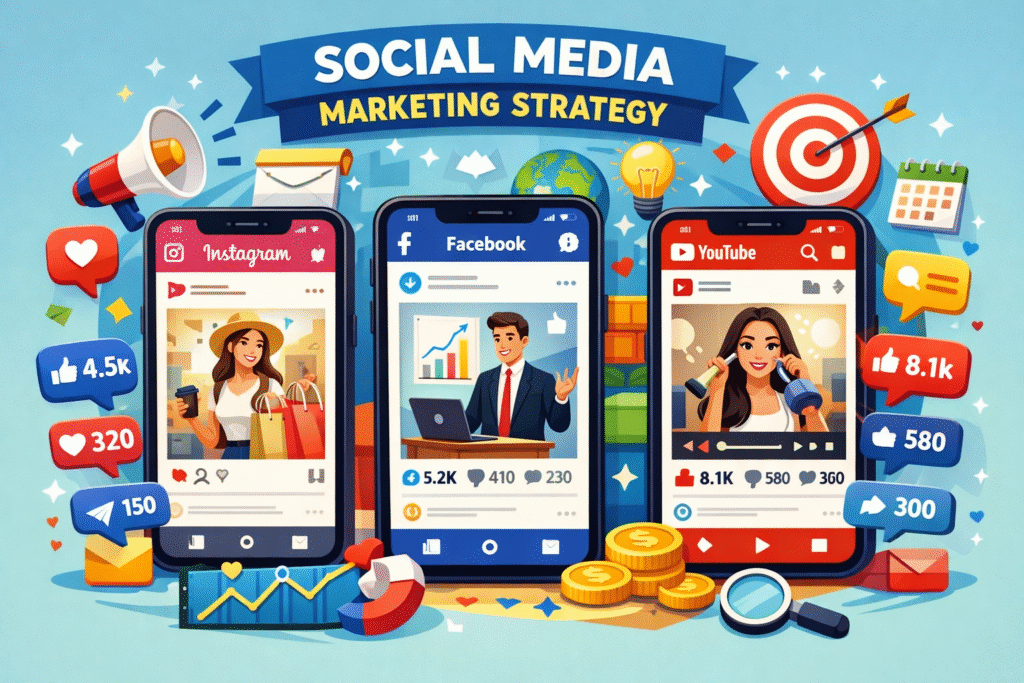
Cost is another important factor when comparing SEO vs Social Media Marketing.
SEO typically requires time, skills, and consistent content creation. While SEO tools and services may have costs, organic search traffic itself does not require payment for each visitor.
Social media marketing can be done organically, but many businesses rely on paid advertisements to reach larger audiences. Advertising campaigns on platforms like Facebook or Instagram require budgets that vary depending on targeting and competition.
For beginners with limited budgets, SEO can often be a more cost-effective long-term investment.
Time and Results
One of the most noticeable differences in SEO vs Social Media Marketing is the speed of results.
SEO usually takes time. Ranking on search engines can require several months of optimization and content development.
Social media marketing can generate visibility much faster. A post can reach thousands of users within hours, especially if it becomes popular or goes viral.
However, while social media delivers quick exposure, SEO provides long-term traffic once rankings are established.
Engagement and Interaction
Engagement is another key difference between SEO vs Social Media Marketing.
SEO focuses on attracting users who are searching for information. Interaction usually happens when users visit a website and read content.
Social media platforms encourage direct engagement. Users can like, comment, share, and interact with brands in real time.
This makes social media a powerful tool for building communities and strengthening customer relationships.
Growth Potential
Growth patterns differ significantly in SEO vs Social Media Marketing.
SEO provides long-term growth. Once a website ranks well in search engines, it can continue attracting traffic for months or even years.
Social media growth can be faster but less predictable. Algorithms change frequently, and visibility may depend on trends or advertising budgets.
A balanced strategy often combines both methods to achieve consistent growth.
Advantages of SEO
SEO offers several advantages that make it attractive for businesses and marketers.
Long-Term Traffic
One of the biggest benefits in the discussion of SEO vs Social Media Marketing is the long-term nature of SEO traffic.
Once a website ranks well, it can generate visitors continuously without ongoing advertising costs.
High Search Intent
SEO targets users who are actively searching for solutions. This often leads to higher conversion rates because visitors already have a clear purpose.
Credibility and Trust
Websites that appear at the top of search results often gain higher trust from users. People tend to believe that top-ranking websites are more reliable and authoritative.
Cost Efficiency
Although SEO requires time and effort, it does not require payment for every visitor. This makes it cost-efficient over time.
Advantages of Social Media Marketing
Social media marketing also offers several benefits that attract businesses and marketers.
Quick Visibility
In the comparison of SEO vs Social Media Marketing, social media often delivers faster visibility.
A single viral post can reach thousands or even millions of users within a short time.
Strong Audience Engagement
Social media platforms allow direct communication between brands and customers. Businesses can respond to comments, messages, and feedback instantly.
Brand Awareness
Social media is an excellent platform for building brand identity and recognition.
Targeted Advertising
Social platforms offer advanced targeting options. Businesses can target users based on location, interests, age, and behavior.
Challenges of SEO
While SEO offers long-term benefits, it also presents certain challenges.
Slow Results
SEO requires patience. Ranking improvements may take several months, especially in competitive industries.
Constant Algorithm Updates
Search engines regularly update their algorithms, which can impact rankings.
Technical Knowledge
SEO requires understanding technical aspects such as site speed, indexing, and structured data.
Challenges of Social Media Marketing
Social media marketing also has limitations.
Dependence on Algorithms
Social media platforms frequently change their algorithms, which affects post visibility.
Short Content Lifespan
Posts on social media often have a short lifespan compared to search engine content.
Continuous Effort
Social media marketing requires consistent posting and engagement to maintain audience interest.
Which is Better for Beginners?
The question of SEO vs Social Media Marketing does not have a single universal answer. The best choice depends on individual goals and resources.
For beginners interested in long-term growth and website traffic, SEO is often a great starting point.
For beginners who prefer creative content and immediate interaction, social media marketing may feel more accessible.
However, many experts recommend learning both strategies because they complement each other.
How SEO and Social Media Work Together
Although the debate of SEO vs Social Media Marketing often compares the two, they actually work well together.
Social media can help promote website content and attract visitors.
SEO can help content appear in search results, bringing long-term traffic.
When combined effectively, both strategies create a strong digital marketing ecosystem.
Best Strategy for Beginners
Beginners can follow a simple strategy that combines both methods:
- Build a website or blog.
- Create valuable content.
- Optimize content for search engines.
- Share content on social media platforms.
- Analyze performance and improve strategies.
This approach helps beginners gain experience in both SEO and social media marketing.
Future Trends in SEO and Social Media Marketing
Digital marketing continues to evolve with new technologies and user behavior patterns.
Some emerging trends include:
- Artificial intelligence in search engines
- Short-form video content
- Voice search optimization
- Influencer marketing
- Personalized marketing experiences
Understanding these trends will help marketers stay competitive in the evolving digital landscape.
Conclusion
Both SEO and social media marketing are essential components of modern digital marketing strategies. The debate of SEO vs Social Media Marketing highlights how each approach offers unique advantages.
SEO focuses on long-term organic traffic and high-intent search users. Social media marketing focuses on engagement, community building, and fast exposure.
For beginners, the best strategy is often to learn both methods and use them together. By combining search engine optimization with social media promotion, businesses and marketers can reach wider audiences and achieve sustainable growth.
With dedication, creativity, and continuous learning, beginners can build successful digital marketing careers using the power of both SEO and social media marketing.
1. Google SEO Starter Guide
Anchor Text: SEO best practices by Google
Link: https://developers.google.com/search/docs/fundamentals/seo-starter-guide
Use in sentence:
Learn the basics of search engine optimization from the SEO best practices by Google.
2. Google Search Central
Anchor Text: How search engines work
Link: https://developers.google.com/search/docs/fundamentals/how-search-works
Use in sentence:
Understanding how search engines work helps beginners improve their SEO strategy.
3. HubSpot Digital Marketing Guide
Anchor Text: complete digital marketing guide
Link: https://blog.hubspot.com/marketing/digital-marketing
Use in sentence:
This complete digital marketing guide explains modern marketing strategies for businesses.
4. Meta Social Media Marketing Guide
Anchor Text: social media marketing strategies
Link: https://www.facebook.com/business/marketing
Use in sentence:
Businesses can learn social media marketing strategies from Meta’s official marketing resources.
5. Moz Beginner SEO Guide
Anchor Text: beginner’s guide to SEO
Link: https://moz.com/beginners-guide-to-seo
Use in sentence:
The beginner’s guide to SEO from Moz is one of the most popular learning resources online.
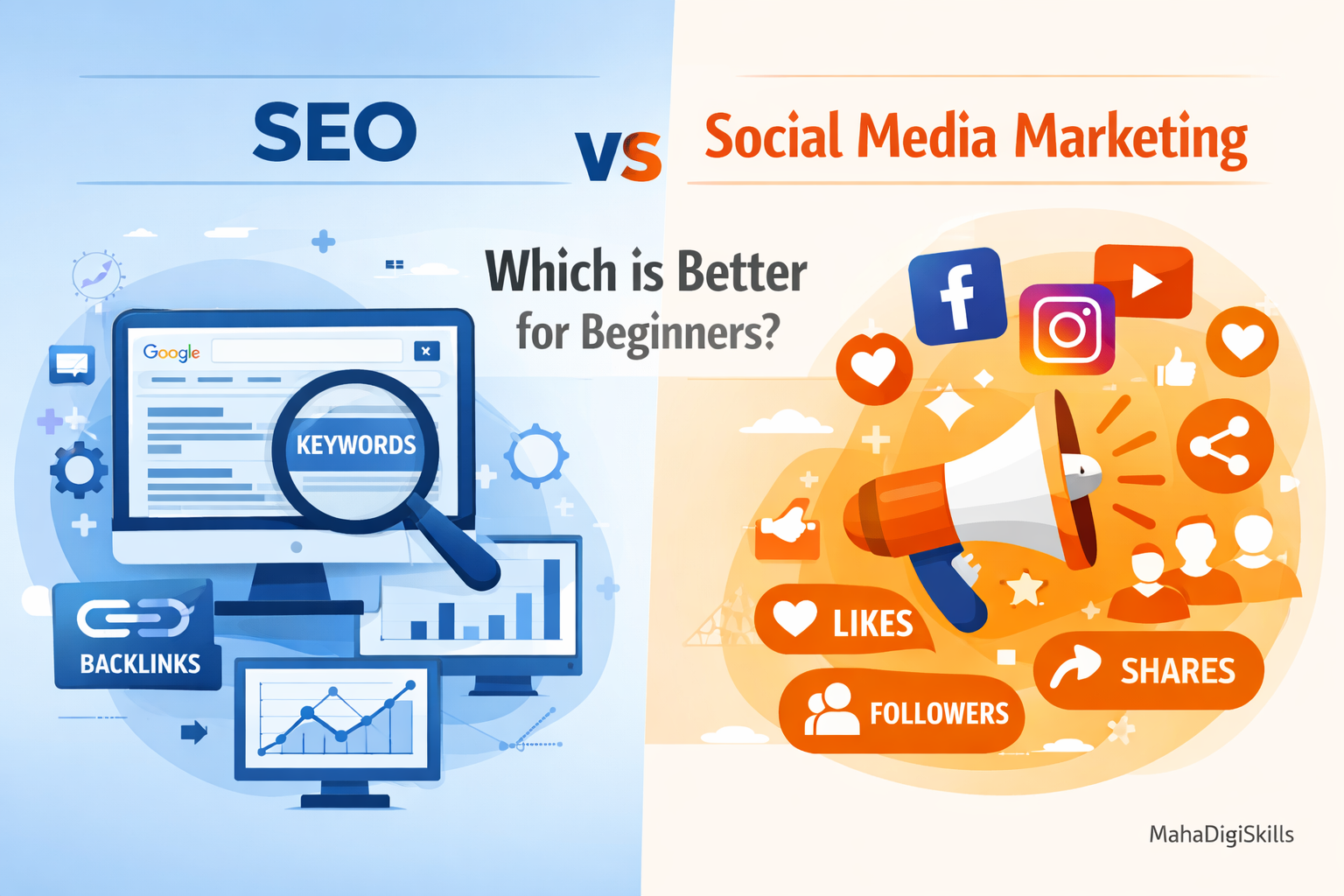

SEO vs Social Media Marketing: Which is Better for Beginners?