
Internships are one of the most important steps in a student’s professional journey. They provide practical experience, industry exposure, and the opportunity to develop real-world competencies that classrooms alone cannot offer. However, many students struggle during internships because they lack the essential internship skills required to succeed in a professional environment.
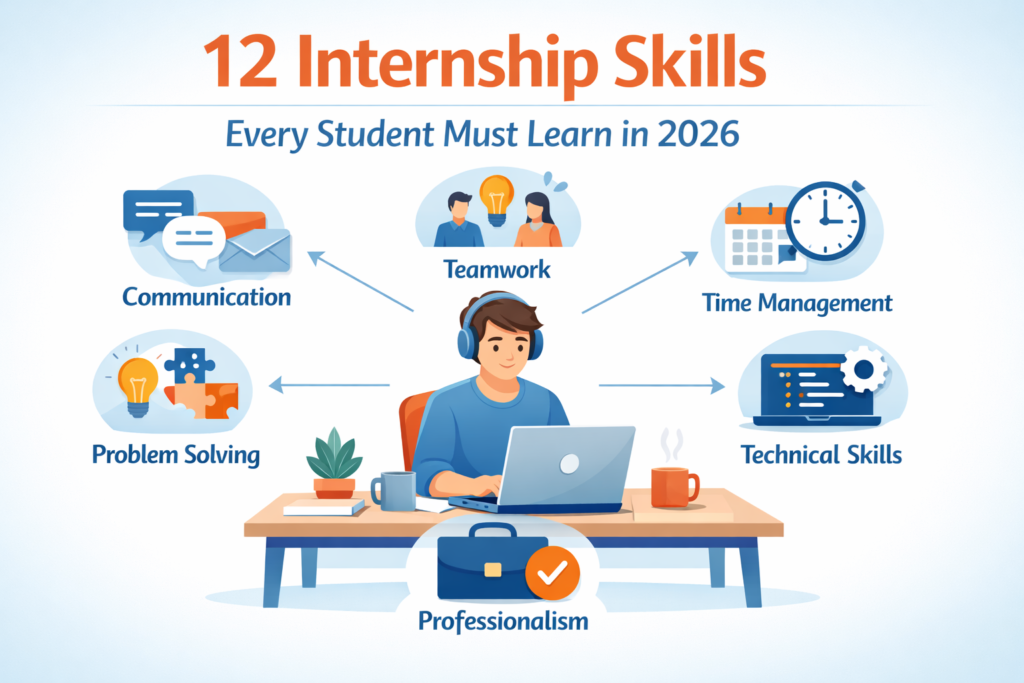
Developing strong internship skills not only helps students perform better during internships but also increases their chances of securing full-time employment later. Companies often use internships as a way to identify potential employees, so students who demonstrate strong professional abilities stand out quickly.
In this comprehensive guide, we will explore the most important internship skills every student should develop. These skills will help you adapt to workplace expectations, collaborate effectively with colleagues, and make a positive impression on employers.
This article will cover practical insights, real-world examples, and actionable tips to help students improve their internship skills and build a strong professional foundation.
Why Internship Skills Are Important for Students
Many students assume that internships are mainly about technical knowledge. While technical expertise is important, employers often look for broader internship skills that demonstrate professionalism, responsibility, and adaptability.
When students possess strong internship skills, they are better equipped to handle workplace challenges. These abilities help interns communicate with colleagues, manage tasks efficiently, and contribute meaningfully to projects.
Another reason why internship skills matter is career development. Students who demonstrate strong professional abilities during internships are more likely to receive job offers, recommendations, and valuable networking opportunities.
Furthermore, internships help students understand how companies operate. Developing strong internship skills allows students to transition smoothly from academic life to professional careers.
1. Communication Skills
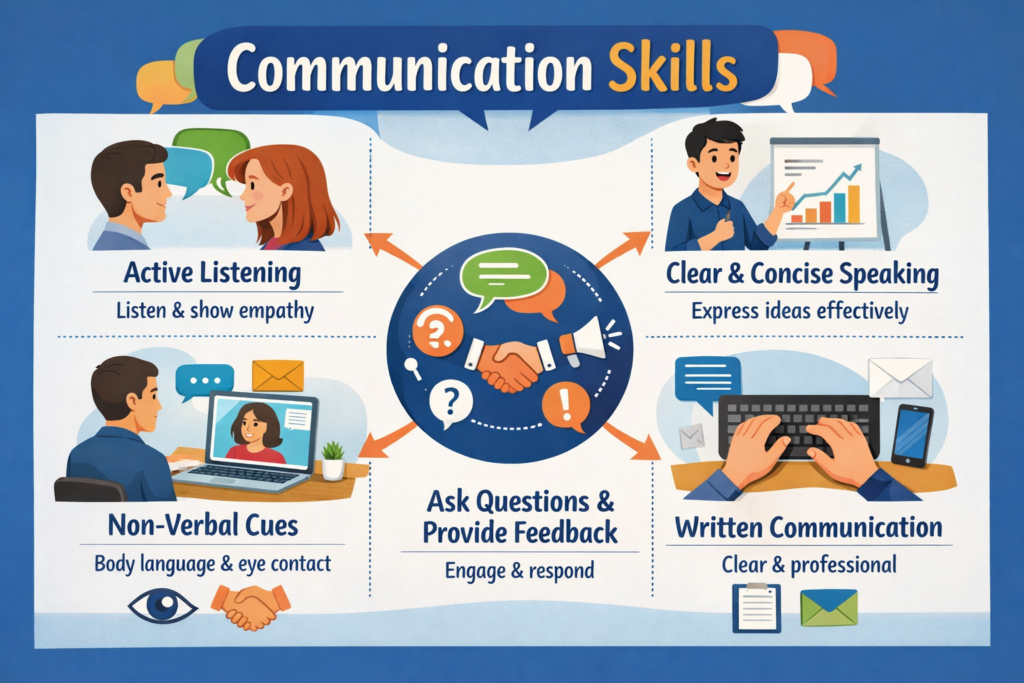
Communication is one of the most critical internship skills that every student must develop. In a professional environment, clear and effective communication helps ensure that tasks are completed accurately and efficiently.
Good communication includes both verbal and written abilities. Interns often interact with supervisors, colleagues, and clients, so expressing ideas clearly is essential. Students with strong internship skills in communication can present their ideas confidently and collaborate effectively with others.
Active listening is another important aspect of communication. Interns should pay attention to instructions, ask questions when necessary, and confirm their understanding of assigned tasks.
Written communication is equally important. Many workplace tasks involve emails, reports, and documentation. Developing strong written internship skills ensures that information is conveyed clearly and professionally.
Students can improve communication abilities by practicing presentations, participating in group discussions, and engaging in professional writing exercises.
2. Teamwork and Collaboration
Modern workplaces rely heavily on teamwork. Employees frequently collaborate on projects, share responsibilities, and contribute ideas to achieve common goals. Therefore, teamwork is a crucial part of developing effective internship skills.
During internships, students may work alongside professionals from different departments. Learning how to cooperate with others and respect diverse perspectives is an important aspect of strong internship skills.
Teamwork requires open communication, mutual respect, and a willingness to contribute. Interns who actively participate in team activities demonstrate strong professional attitudes.
Additionally, collaboration helps interns learn from experienced professionals. Observing how colleagues approach challenges can significantly improve a student’s internship skills and problem-solving abilities.
Students can strengthen teamwork abilities by participating in group projects, volunteering for team assignments, and maintaining a positive attitude toward collaboration.
3. Time Management
Time management is another essential component of strong internship skills. In professional environments, employees often handle multiple tasks simultaneously while meeting strict deadlines.
Students who manage their time effectively are more productive and less likely to feel overwhelmed during internships. Strong internship skills in time management allow interns to prioritize tasks and complete assignments efficiently.
Interns should start by organizing their daily responsibilities. Creating task lists, setting deadlines, and tracking progress can significantly improve productivity.
Another key element of time management is avoiding procrastination. Delaying tasks can create unnecessary stress and affect overall performance.
Developing disciplined routines helps interns build reliable internship skills that employers value highly.
Students can enhance their time management abilities by using productivity tools, planning schedules, and maintaining focus on important tasks.
4. Problem-Solving Skills
Workplaces often involve unexpected challenges. Interns may encounter technical issues, communication misunderstandings, or project obstacles. Strong problem-solving internship skills enable students to address these challenges effectively.
Problem-solving involves analyzing situations, identifying possible solutions, and implementing practical strategies. Interns who demonstrate proactive thinking are often recognized for their valuable contributions.
Critical thinking plays a significant role in developing effective internship skills. Students should evaluate different options carefully before making decisions.
Creativity is also an important part of problem-solving. Innovative solutions can help organizations improve processes and overcome obstacles.
Students can improve their problem-solving abilities by practicing analytical thinking, participating in case studies, and learning from real-world examples.
5. Professionalism
Professionalism is a key factor that distinguishes successful interns from average ones. Strong professional behavior reflects well-developed internship skills and demonstrates respect for workplace standards.
Professionalism includes punctuality, responsibility, and appropriate workplace behavior. Interns should arrive on time, complete assigned tasks diligently, and maintain a positive attitude.
Another important aspect of professionalism is workplace etiquette. Respecting colleagues, maintaining confidentiality, and communicating politely are essential internship skills.
Appearance can also contribute to professional impressions. Dressing appropriately and maintaining a neat appearance helps interns project confidence and reliability.
Students who consistently demonstrate professionalism develop strong internship skills that employers value when considering future employment opportunities.
6. Technical Skills
Technical knowledge is another important component of effective internship skills. Depending on the industry, interns may need specific abilities such as programming, data analysis, marketing tools, or design software.
Students should familiarize themselves with the tools and technologies used in their field before starting an internship. This preparation helps them apply their knowledge effectively and contribute to projects.
However, technical expertise alone is not enough. Combining technical knowledge with strong internship skills such as communication and teamwork creates well-rounded professionals.
Continuous learning is essential for improving technical abilities. Students should explore online courses, tutorials, and training programs to enhance their internship skills.
Employers appreciate interns who show initiative in expanding their knowledge and staying updated with industry trends.
Building a Strong Internship Foundation
Developing strong internship skills requires consistent effort and practice. Students should actively seek opportunities to improve their abilities through academic projects, extracurricular activities, and professional training.
Internships provide an ideal environment for applying these skills in real-world situations. By demonstrating dedication and enthusiasm, students can gain valuable experience and build meaningful professional relationships.
The most successful interns are those who approach every task as a learning opportunity. Strong internship skills allow students to grow both personally and professionally.
In the first part of this guide, we discussed several essential internship skills such as communication, teamwork, time management, problem-solving, professionalism, and technical abilities. These competencies form the foundation for a successful internship experience.
However, mastering basic internship skills alone is not enough in today’s competitive professional world. Students must also develop additional capabilities that help them stand out, build networks, and create long-term career opportunities.
In this second part of the guide, we will explore advanced internship skills that help students maximize their internship experience and convert it into long-term professional success.
7. Adaptability and Learning Mindset
One of the most valuable internship skills students can develop is adaptability. Work environments change rapidly, and interns must be prepared to handle new challenges, technologies, and responsibilities.
Unlike classroom settings, workplaces often involve unexpected situations. Tasks may change, priorities may shift, and new projects may arise suddenly. Students with strong internship skills remain flexible and adapt quickly to these changes.
A learning mindset is closely connected to adaptability. Interns should view every challenge as an opportunity to grow. Asking questions, seeking feedback, and exploring new ideas can significantly improve a student’s internship skills.
Employers appreciate interns who show curiosity and enthusiasm for learning. These qualities indicate that the student is motivated to improve and contribute effectively to the organization.
Students can strengthen adaptability by stepping outside their comfort zones, volunteering for new tasks, and continuously expanding their knowledge.
8. Networking Skills
Networking is one of the most powerful internship skills students can develop during their professional journey. Internships provide access to experienced professionals, mentors, and industry experts who can offer valuable career guidance.
Building professional relationships helps students gain insights into industry trends and career opportunities. Strong networking internship skills also increase the chances of receiving recommendations or job offers after completing an internship.
Effective networking involves genuine communication and mutual respect. Interns should engage in conversations, ask thoughtful questions, and show interest in learning from colleagues.
LinkedIn and other professional platforms also play an important role in networking. Students can connect with coworkers, supervisors, and industry professionals to maintain long-term relationships.
By developing strong networking internship skills, students can expand their professional connections and open doors to future career opportunities.
9. Initiative and Proactive Thinking
Taking initiative is another important component of strong internship skills. Employers value interns who actively contribute ideas and demonstrate enthusiasm for their work.
Instead of waiting for instructions, proactive interns look for opportunities to assist with projects, solve problems, or improve processes. This approach shows dedication and responsibility.
Initiative also reflects confidence. Students who demonstrate strong internship skills are willing to share ideas and suggest improvements when appropriate.
However, initiative should always be balanced with respect for workplace hierarchy. Interns should communicate their ideas professionally and seek approval when necessary.
Students can develop proactive internship skills by observing workplace needs, identifying potential improvements, and offering assistance to colleagues.
10. Digital and Technological Skills
Modern workplaces rely heavily on digital tools and technology. Therefore, digital literacy is a crucial aspect of effective internship skills.
Interns may need to use productivity software, collaboration platforms, project management tools, or data analysis programs. Familiarity with these technologies improves efficiency and performance.
For example, tools such as Microsoft Office, Google Workspace, and project management platforms are commonly used in professional environments. Learning these tools can strengthen a student’s internship skills significantly.
In addition, students interested in fields such as marketing, design, or programming should learn specialized software related to their industry.
Continuous technological learning helps interns stay competitive and maintain strong internship skills throughout their careers.
11. Emotional Intelligence
Emotional intelligence is an often overlooked but highly valuable component of strong internship skills. It refers to the ability to understand and manage emotions effectively in professional environments.
Interns who possess strong emotional intelligence can handle stress, respond to feedback positively, and maintain good relationships with colleagues.
Understanding the perspectives of others is another key aspect of emotional intelligence. Students with strong internship skills recognize the importance of empathy and respectful communication.
Conflict resolution is also influenced by emotional intelligence. When disagreements arise, interns should remain calm and focus on finding constructive solutions.
Developing emotional intelligence helps students build stronger professional relationships and enhances overall internship skills.
12. Goal Setting and Career Planning
Successful interns often approach their internship with clear goals. Setting objectives helps students focus on developing specific internship skills during their experience.
For example, an intern may aim to improve communication abilities, learn a particular software tool, or gain deeper industry knowledge.
Goal setting encourages motivation and progress tracking. Students can evaluate their performance and identify areas where their internship skills need improvement.
Career planning is also an important outcome of internships. By observing workplace environments, students gain a clearer understanding of potential career paths.
Students who actively develop their internship skills during internships are better prepared for future professional opportunities.
Common Mistakes Interns Should Avoid
While developing strong internship skills, students should also be aware of common mistakes that can negatively affect their professional growth.
One common mistake is lack of communication. Interns who fail to ask questions or clarify instructions may misunderstand tasks.
Another mistake is poor time management. Delays and missed deadlines can create a negative impression and weaken perceived internship skills.
Some interns also hesitate to interact with colleagues. Avoiding communication reduces opportunities to build relationships and learn from experienced professionals.
Finally, ignoring feedback can hinder growth. Constructive feedback helps improve internship skills and should always be welcomed as a learning opportunity.
Avoiding these mistakes allows students to demonstrate professionalism and maximize their internship experience.
How Students Can Improve Internship Skills
Improving internship skills requires dedication and continuous effort. Students should focus on learning from every experience and actively seeking opportunities for improvement.
One effective strategy is self-reflection. After completing tasks or projects, interns should evaluate what they learned and how they can improve.
Seeking feedback from supervisors is another valuable method. Constructive feedback helps identify strengths and weaknesses in internship skills.
Students can also enhance their abilities through workshops, online courses, and professional training programs.
Networking with experienced professionals provides additional guidance and inspiration for improving internship skills.
The Long-Term Benefits of Strong Internship Skills
Developing strong internship skills offers long-term benefits that extend beyond the internship itself. These abilities prepare students for successful professional careers.
Students who demonstrate excellent internship skills are more likely to receive job offers, recommendations, and career opportunities.
In addition, internships help students build confidence. Real-world experience allows them to apply knowledge and understand workplace expectations.
Strong internship skills also contribute to professional reputation. Employers often recommend reliable interns to other organizations, creating additional opportunities.
Ultimately, internships serve as a bridge between education and employment. Students who invest time in developing strong internship skills are better prepared to succeed in competitive industries.
Conclusion
Internships are powerful learning experiences that help students transition from academic environments to professional careers. However, success during internships depends largely on developing strong internship skills.
Essential competencies such as communication, teamwork, time management, problem-solving, and professionalism form the foundation for successful internships. In addition, advanced abilities like networking, adaptability, initiative, and emotional intelligence further strengthen a student’s professional capabilities.
By continuously improving their internship skills, students can gain valuable experience, build professional relationships, and increase their chances of securing rewarding career opportunities.
Students should approach internships with curiosity, dedication, and a willingness to learn. With the right mindset and strong internship skills, every internship can become a stepping stone toward long-term professional success.
1. LinkedIn – Professional Networking
Use anchor text:
Build professional connections on LinkedIn
2. Indeed – Internship and Job Search
Anchor text:
Find internship opportunities on Indeed
More Articles –
Skills You Need to Start Digital Marketing in 2026
Official Update: BSEB 12th Result 2026 Today – How to Check Bihar Board Intermediate Result
10 Digital Marketing Terms Every Beginner Should Know (Complete Guide)
Digital Marketing Roadmap for Beginners: Complete Guide to Start in 2026
SEO vs Social Media Marketing: Which is Better for Beginners?
What is PPC in Digital Marketing? Complete Guide for Beginners
10 Digital Marketing Terms Every Beginner Should Know (Complete Guide)
How to Start Digital Marketing with Zero Investment (Complete Beginner Guide 2026)
Free Tools for Digital Marketing Beginners (Complete Guide 2026)
Digital Marketing Course Checklist: Complete Beginner Guide to Start Your Career
Digital Marketing Mistakes – Common Beginner Mistakes and How to Avoid Them