
The digital economy has transformed how people work and earn money. One of the most significant changes is the rise of freelancing. Millions of professionals around the world now choose independent work instead of traditional jobs. Because of this shift, freelancing for beginners has become one of the most searched topics online.
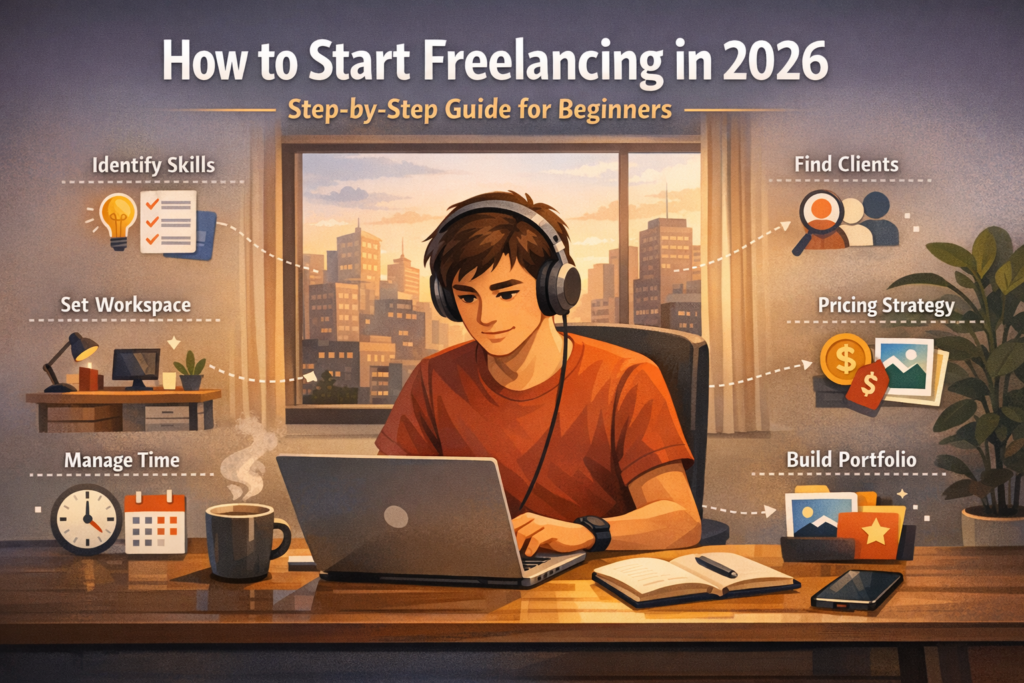
Freelancing allows individuals to work remotely, choose their projects, and build flexible careers. Whether you are a student, a working professional, or someone looking for an additional income source, freelancing can provide exciting opportunities.
However, many people feel confused about where to begin. Questions like how to find clients, what skills to learn, and how to build a portfolio often create uncertainty. This guide explains the essential steps involved in freelancing for beginners so that anyone can start confidently.
In this first part of the guide, we will focus on understanding freelancing, identifying the right skills, choosing a niche, building a portfolio, and preparing for your first freelance projects.
Understanding Freelancing
Freelancing is a type of work arrangement where professionals provide services to clients without being permanently employed by a single company. Instead of working as a full-time employee, freelancers work independently and usually manage multiple clients.
In the modern digital marketplace, freelancing opportunities exist in almost every industry. Businesses often hire freelancers for short-term tasks, specialized expertise, or remote collaboration.
Common freelance services include:
- Graphic design
- Content writing
- Web development
- Video editing
- Digital marketing
- SEO services
- Social media management
- Data analysis
The growth of remote work platforms has made freelancing for beginners more accessible than ever before. Today, individuals can connect with clients from different countries using online marketplaces and communication tools.
Understanding the basic concept of freelancing helps beginners recognize how flexible and diverse this career path can be.
Why Freelancing is Growing Rapidly
Freelancing has grown significantly over the last decade due to several important factors. Advances in internet technology, digital communication, and online payment systems have made remote collaboration easier.
Companies are also increasingly interested in hiring freelancers because it allows them to reduce costs and access specialized talent when needed.
Some key reasons for the growth of freelancing include:
Remote Work Adoption
Businesses around the world now accept remote collaboration as a normal part of their operations.
Global Talent Access
Companies can hire freelancers from different countries instead of limiting recruitment to local candidates.
Flexible Work Culture
Many professionals prefer flexible work schedules instead of traditional office environments.
These changes have made freelancing for beginners an attractive option for people seeking independence and career flexibility.
Advantages of Freelancing
Freelancing offers several benefits that traditional employment may not provide.
One of the biggest advantages is flexibility. Freelancers can decide when and where they want to work. This flexibility allows professionals to balance work with personal responsibilities.
Another benefit is the potential for higher earnings. Unlike salaried jobs where income is fixed, freelancers can increase their income by taking more projects or charging higher rates as their experience grows.
Freelancers also gain exposure to diverse industries and projects, which helps them develop valuable skills and professional networks.
Because of these benefits, many people exploring freelancing for beginners see it as a long-term career opportunity rather than just a side income.
Challenges Freelancers Should Expect
Although freelancing offers many advantages, beginners should also understand the challenges involved.
Freelancers are responsible for managing their own workload, finances, and client relationships. Unlike traditional employees, freelancers do not receive benefits such as fixed salaries, paid leave, or employer-provided equipment.
Some common challenges include:
- Finding consistent clients
- Managing irregular income
- Handling project deadlines
- Communicating with clients effectively
Learning how to overcome these challenges is an important part of mastering freelancing for beginners.
Identifying Your Freelance Skills
Before starting a freelance career, it is important to identify the skills you can offer to clients.
Freelancers succeed when they focus on skills that are both valuable and in demand. These skills can be technical, creative, or strategic depending on your interests and experience.
Examples of popular freelance skills include:
- Content writing and blogging
- Search engine optimization
- Graphic design
- Web development
- Video editing
- Social media management
- Translation services
When exploring freelancing for beginners, it is helpful to analyze your existing abilities and determine how they can be turned into services.
For example, someone with strong writing skills may offer blog writing services, while someone with technical knowledge might focus on website development.
Identifying your strengths helps you build a focused freelance strategy.
Choosing a Profitable Freelance Niche
Selecting the right niche is one of the most important decisions in freelancing.
A niche represents the specific area or specialization in which you provide services. Instead of offering broad services, freelancers often achieve better results by focusing on a particular industry or skill.
Examples of niche specialization include:
- SEO blog writing for startups
- Logo design for small businesses
- Website development for e-commerce stores
- Social media marketing for local brands
By specializing in a niche, freelancers can position themselves as experts and attract clients who are specifically looking for those services.
Choosing a niche is a key step in freelancing for beginners because it allows you to build credibility and stand out in competitive marketplaces.
Creating a Professional Portfolio
A portfolio is one of the most powerful tools for freelancers. It demonstrates your skills and provides evidence of the work you can deliver.
Clients usually review portfolios before hiring freelancers. Even if you are new to freelancing, you can create sample projects to showcase your abilities.
For example:
- Writers can publish articles on blogging platforms
- Designers can create sample brand identities
- Developers can build demo websites
- Marketers can present campaign strategies
A strong portfolio increases trust and helps clients understand your expertise.
When building a portfolio for freelancing for beginners, focus on quality rather than quantity. A few well-presented projects can make a strong impression.
Setting Up Your Freelance Workspace
Working as a freelancer requires a productive environment. Although freelancers can work from anywhere, having a dedicated workspace improves focus and efficiency.
A basic freelance setup should include:
- A reliable computer or laptop
- Stable internet connection
- Comfortable desk and chair
- Headphones or microphone for meetings
- Essential software tools
Creating a professional workspace also helps freelancers maintain discipline and separate work from personal life.
For individuals learning freelancing for beginners, establishing a proper work environment can significantly improve productivity.
Learning Basic Business Skills
Freelancing is not only about performing tasks; it also involves managing a small business.
Freelancers must handle client communication, project management, and financial planning. Understanding these aspects helps freelancers build long-term success.
Important business skills include:
- Negotiation and pricing
- Time management
- Client communication
- Project organization
Beginners who develop these abilities while exploring freelancing for beginners can operate more professionally and attract higher-quality clients.
Preparing for Your First Freelance Projects
Once you have identified your skills, chosen a niche, and created a portfolio, the next step is preparing for your first projects.
Before accepting work, freelancers should clarify expectations with clients. This includes discussing deadlines, project scope, and payment terms.
Clear communication prevents misunderstandings and builds trust.
Preparing carefully for initial projects helps beginners gain confidence while practicing freelancing for beginners in real-world situations.
we explored the foundations of freelancing, including understanding the freelance market, identifying your skills, selecting a niche, and building a professional portfolio. These elements create the base for starting a freelance career.
However, building a successful freelance business requires more than just skills. Beginners must learn how to find clients, price their services, manage finances, and maintain long-term growth.
In this second part of the guide, we will explore the advanced strategies that help individuals succeed in freelancing for beginners and turn their skills into a sustainable online career.
Finding Your First Freelance Clients
One of the biggest challenges new freelancers face is finding their first clients. Without experience or reviews, many beginners feel uncertain about how to attract opportunities.
However, there are several effective strategies that can help people starting freelancing for beginners connect with potential clients.
The first approach is using freelancing platforms. These websites connect businesses with freelancers looking for projects. Popular platforms include Upwork, Fiverr, Freelancer, and PeoplePerHour.
Another strategy is networking. Many freelancers find clients through professional communities, social media platforms, and industry forums.
Cold outreach can also be effective. Beginners can contact businesses directly and offer solutions to their problems. For example, a digital marketer might approach small businesses and offer social media management services.
Consistency is important when searching for freelance work. Beginners who send proposals regularly and improve their communication skills increase their chances of landing projects.
Best Freelancing Platforms for Beginners
Online marketplaces have made freelancing for beginners more accessible than ever before. These platforms allow freelancers to create profiles, showcase portfolios, and apply for projects posted by clients.
Some of the most popular platforms include:
Upwork
Upwork is one of the largest freelancing platforms in the world. It offers projects across many industries including writing, design, programming, and marketing.
Fiverr
Fiverr allows freelancers to create service listings called “gigs.” Clients can browse these listings and hire freelancers directly.
Freelancer
Freelancer is another global platform where businesses post projects and freelancers submit proposals to win work.
PeoplePerHour
This platform focuses on hourly and project-based work for digital professionals.
For individuals exploring freelancing for beginners, starting with one or two platforms can help build experience and reviews.
Writing Winning Freelance Proposals
A strong proposal is one of the most important tools for securing freelance projects. Clients often receive dozens of applications for a single project, so your proposal must stand out.
When writing proposals for freelancing for beginners, consider these tips:
First, carefully read the client’s project description. Understanding the client’s needs allows you to provide a personalized response.
Second, introduce yourself briefly and explain your relevant experience. Avoid long introductions that do not address the client’s problem.
Third, describe how you plan to complete the project. Clients appreciate freelancers who provide clear solutions.
Finally, maintain a professional and friendly tone throughout the proposal.
Well-written proposals increase the chances of beginners successfully entering the world of freelancing for beginners.
Setting Freelance Pricing
Pricing is another important aspect of freelancing. Many beginners struggle to determine how much they should charge for their services.
Freelancers generally use three main pricing models:
Hourly Rates
Clients pay freelancers based on the number of hours worked.
Project-Based Pricing
The freelancer sets a fixed price for completing the entire project.
Retainer Contracts
Clients pay a monthly fee for ongoing services.
When deciding rates in freelancing for beginners, beginners should consider factors such as skill level, time required, and market demand.
It is common for beginners to start with moderate rates while building experience and client reviews. Over time, freelancers can increase their prices as their reputation grows.
Managing Freelance Finances
Freelancers must manage their own finances, which is different from traditional employment where salaries are fixed.
Financial planning is essential for long-term success in freelancing for beginners.
Freelancers should track their income and expenses carefully. Keeping financial records helps in budgeting and tax preparation.
Important financial practices include:
- Maintaining a separate bank account for freelance income
- Saving a portion of income for taxes
- Tracking expenses related to work tools and software
- Building an emergency fund
Financial discipline helps freelancers maintain stability even during periods when projects are limited.
Time Management for Freelancers
Freelancers often work independently, which means they must manage their own schedules and deadlines.
Poor time management can lead to missed deadlines and client dissatisfaction.
Successful professionals practicing freelancing for beginners use productivity techniques to stay organized.
Some helpful strategies include:
Creating a Daily Schedule
Planning tasks in advance helps freelancers maintain focus.
Using Productivity Tools
Applications such as Trello, Notion, and Asana help track projects and deadlines.
Setting Realistic Work Goals
Breaking large projects into smaller tasks improves efficiency.
Managing time effectively allows freelancers to deliver quality work while maintaining work-life balance.
Building Long-Term Client Relationships
Freelancing success depends heavily on building strong relationships with clients.
Instead of constantly searching for new clients, experienced freelancers often rely on repeat clients who trust their work.
Professionals practicing freelancing for beginners should focus on delivering excellent service and maintaining clear communication.
Some strategies for building long-term relationships include:
- Meeting deadlines consistently
- Providing high-quality work
- Communicating regularly with clients
- Being professional and respectful
Satisfied clients often provide referrals and additional projects, which helps freelancers grow their careers.
Expanding Your Freelance Skillset
The freelance market evolves constantly as technology and business needs change.
To remain competitive, freelancers must continuously improve their skills.
Individuals learning freelancing for beginners should invest time in learning new tools and techniques.
Some ways to expand skills include:
- Taking online courses
- Attending webinars and workshops
- Reading industry blogs
- Practicing new tools and software
Continuous learning helps freelancers adapt to market trends and offer higher-value services.
Marketing Yourself as a Freelancer
Marketing is an important part of freelancing because clients need to discover your services.
Freelancers practicing freelancing for beginners can promote themselves through several channels.
A personal website is one of the most effective marketing tools. It allows freelancers to showcase portfolios, testimonials, and services.
Social media platforms such as LinkedIn, Twitter, and Instagram can also help freelancers build professional networks.
Content marketing is another powerful strategy. Writing blogs, sharing case studies, or publishing tutorials demonstrates expertise and attracts potential clients.
Effective self-promotion increases visibility and helps freelancers build strong professional brands.
Scaling Your Freelance Career
Once freelancers gain experience and stable clients, they may want to scale their business.
Scaling means increasing income without proportionally increasing working hours.
Some freelancers achieve this by:
- Increasing service rates
- Offering premium services
- Creating digital products
- Building small teams to handle larger projects
Scaling opportunities allow professionals who started with freelancing for beginners to transform freelancing into a full business.
Future of Freelancing
Freelancing continues to grow as companies adopt remote work models and digital transformation.
Experts predict that more businesses will rely on freelance professionals for specialized projects.
Emerging technologies such as artificial intelligence, automation, and remote collaboration tools will further shape the freelance market.
Individuals who understand the fundamentals of freelancing for beginners and remain adaptable can build sustainable careers in the evolving digital economy.
Final Conclusion
Freelancing offers an exciting opportunity for individuals who want flexibility, independence, and global career opportunities.
Starting a freelance career requires planning, skill development, and consistent effort. By identifying your strengths, building a portfolio, finding clients, managing finances, and continuously learning, anyone can succeed in freelancing.
The journey may begin with small projects, but over time freelancers can build strong reputations and long-term client relationships.
For those willing to remain patient and persistent, freelancing for beginners can become a powerful path toward financial freedom and professional growth.
1. Freelance.gossipie – Marketplace
https://freelance.gossipie.in/
Suggested anchor text:
Find freelance projects on Freelance.gossipie.
Why link:
One of the world’s largest freelance marketplaces.
2. Fiverr – Freelance Services Platform
Suggested anchor text:
Start offering freelance services on Fiverr.
Why link:
Popular platform for beginners starting freelancing.
3. Freelancer – Global Freelance Network
Suggested anchor text:
Discover freelance jobs on Freelancer.com.
Why link:
Large international freelance job platform.
More Articles –
Skills You Need to Start Digital Marketing in 2026
Official Update: BSEB 12th Result 2026 Today – How to Check Bihar Board Intermediate Result
10 Digital Marketing Terms Every Beginner Should Know (Complete Guide)
Digital Marketing Roadmap for Beginners: Complete Guide to Start in 2026
SEO vs Social Media Marketing: Which is Better for Beginners?
What is PPC in Digital Marketing? Complete Guide for Beginners
10 Digital Marketing Terms Every Beginner Should Know (Complete Guide)
How to Start Digital Marketing with Zero Investment (Complete Beginner Guide 2026)
Free Tools for Digital Marketing Beginners (Complete Guide 2026)
Digital Marketing Course Checklist: Complete Beginner Guide to Start Your Career
Digital Marketing Mistakes – Common Beginner Mistakes and How to Avoid Them