
Introduction
In today’s digital-first world, having an online presence is no longer optional—it is essential. However, simply building a website or creating social media pages is not enough. The real challenge lies in reaching the right audience at the right time. This is where Google Ads becomes a powerful tool for businesses of all sizes.
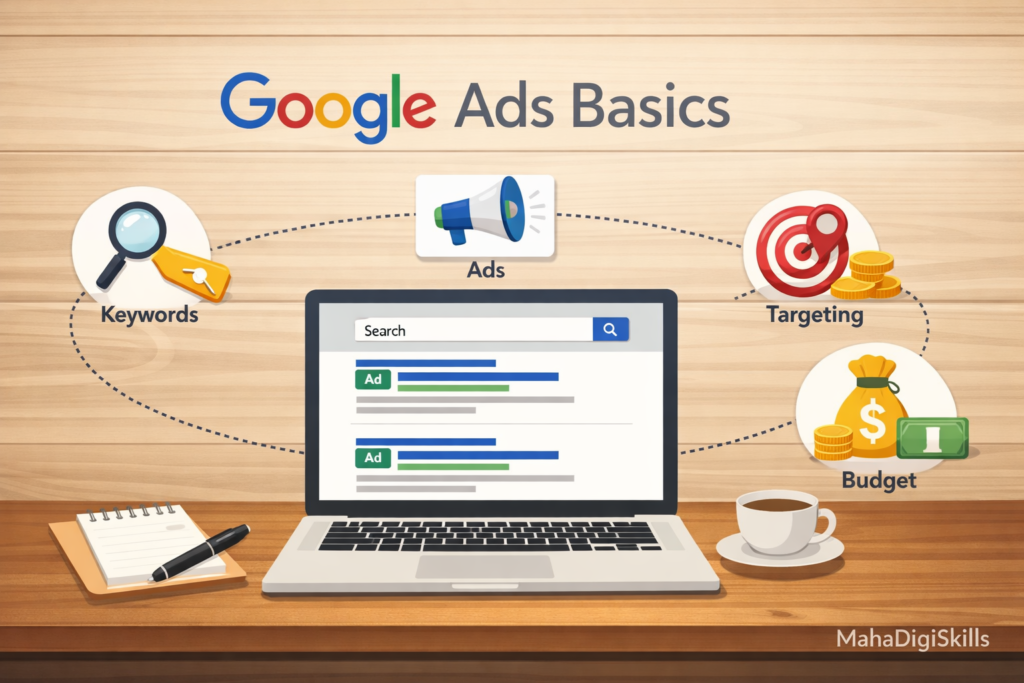
Whether you are a beginner, entrepreneur, or digital marketer, understanding Google Ads can help you drive targeted traffic, generate leads, and increase sales. In this comprehensive guide, we will explore everything you need to know about Google Ads, from basic concepts to advanced strategies.
📌 What is Google Ads?
Google Ads is an online advertising platform developed by Google that allows businesses to promote their products or services through paid advertisements. These ads appear on Google search results, YouTube, mobile apps, and partner websites.
In simple terms, Google Ads helps you show your business to people who are actively searching for what you offer.
🎯 Why Google Ads is Important
In a competitive digital environment, relying solely on organic traffic can be slow and unpredictable. Google Ads provides immediate visibility and measurable results.
Key Benefits:
- Instant traffic and visibility
- Highly targeted audience reach
- Flexible budget control
- Measurable performance metrics
- Scalable campaigns
Because of these advantages, businesses across industries rely heavily on Google Ads to accelerate growth.
🔍 How Google Ads Works
The system behind Google Ads is based on an auction model.
Step-by-Step Process:
- A user enters a search query
- Advertisers bid on relevant keywords
- Google evaluates ads based on bid and quality
- The most relevant ads appear in search results
It is important to understand that in Google Ads, the highest bid does not always win. The platform also considers ad quality and relevance.
🔑 Understanding Keywords
Keywords are the foundation of any successful Google Ads campaign.
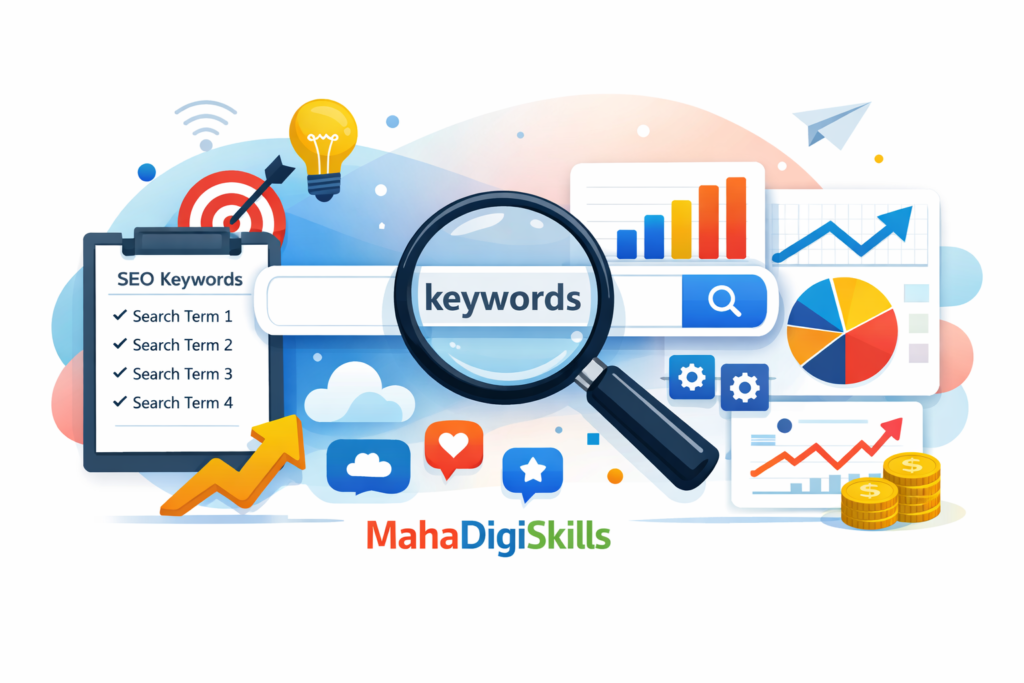
Types of Keywords:
- Broad Match
- Phrase Match
- Exact Match
- Negative Keywords
Choosing the right keywords ensures that your Google Ads campaigns reach the right audience.
📢 Types of Campaigns
1. Search Campaigns
These are text-based ads that appear in search results.
They are the most commonly used format in Google Ads.
2. Display Campaigns
Visual ads that appear on websites within the Google Display Network.
3. Video Campaigns
Ads that run on YouTube and other video platforms.
4. Shopping Campaigns
Best suited for e-commerce businesses.
5. App Campaigns
Designed to promote mobile applications.
Each campaign type in Google Ads serves a unique purpose and marketing goal.
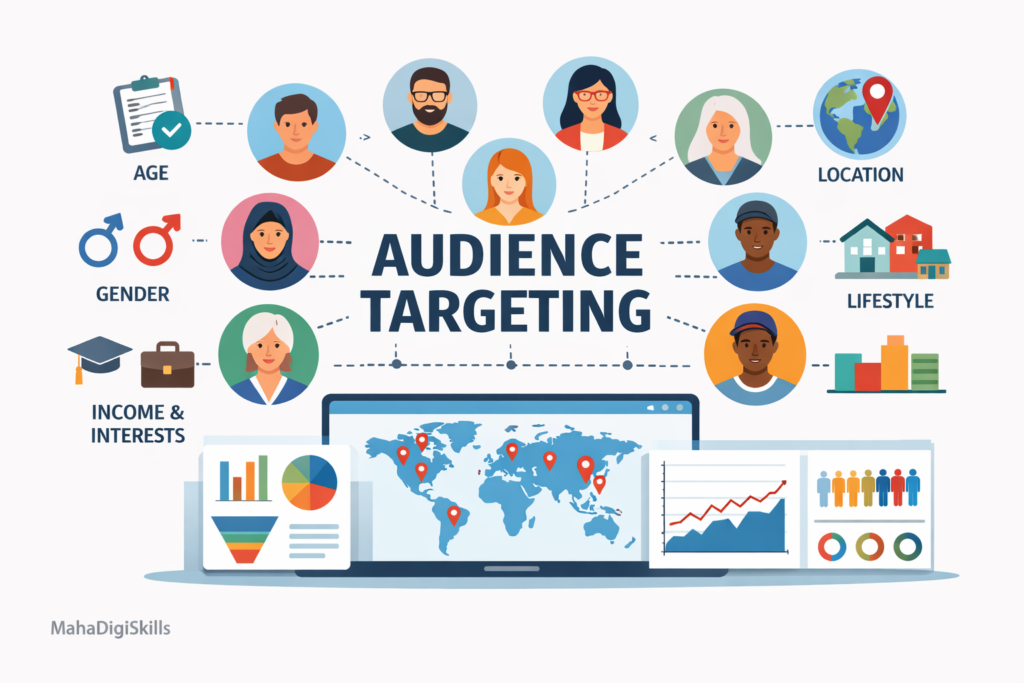
🎯 Targeting Options
Targeting is one of the most powerful features of Google Ads.
Types of Targeting:
- Geographic targeting
- Demographic targeting
- Interest-based targeting
- Device targeting
With Google Ads, you can precisely reach users who are most likely to convert.
💰 Budgeting and Cost Control
One of the biggest advantages of Google Ads is budget flexibility.
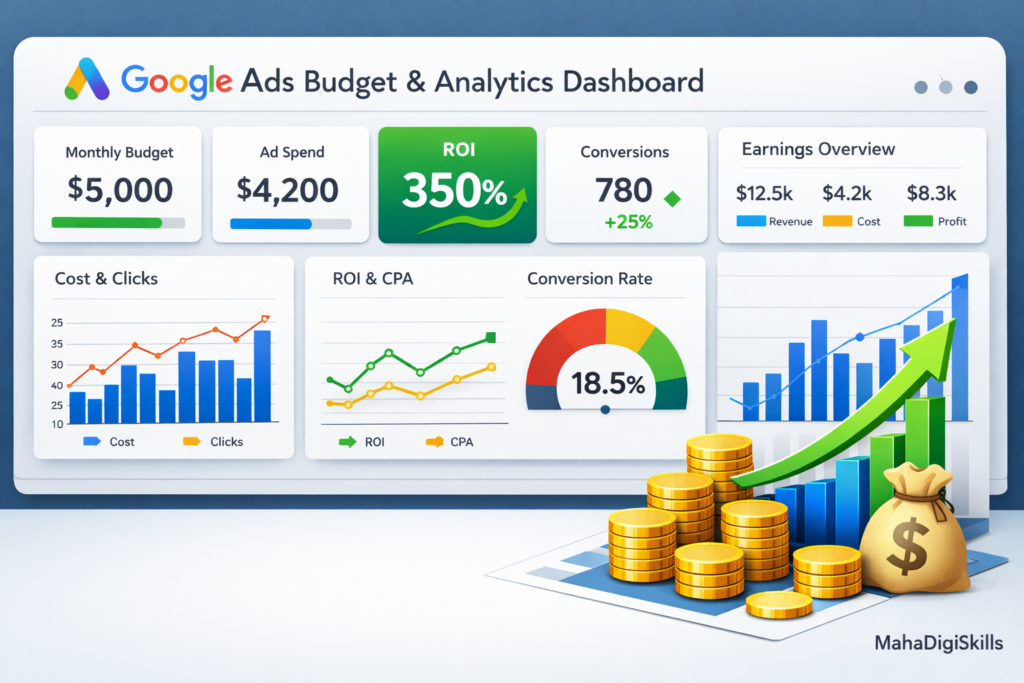
Budget Options:
- Daily budget
- Monthly budget
- Cost per click (CPC)
- Cost per thousand impressions (CPM)
You can start small and gradually increase your spending as your Google Ads campaigns perform better.
📊 Bidding Strategies
Common Bidding Methods:
- Manual CPC
- Maximize Clicks
- Target CPA
- Target ROAS
Selecting the right bidding strategy is essential for maximizing results in Google Ads.
📈 Understanding Quality Score
Quality Score is a metric used by Google Ads to determine the relevance and quality of your ads.
Factors Affecting Quality Score:
- Ad relevance
- Expected click-through rate
- Landing page experience
A higher Quality Score in Google Ads can lead to lower costs and better ad placements.
🧠 Writing High-Converting Ads
Best Practices:
- Use compelling headlines
- Include clear calls to action
- Highlight unique selling points
- Incorporate keywords naturally
Effective ad copy can significantly improve the performance of your Google Ads campaigns.
🌐 Landing Page Optimization
A well-optimized landing page is critical for success in Google Ads.
Key Elements:
- Fast loading speed
- Mobile responsiveness
- Clear messaging
- Strong call-to-action
Even the best Google Ads campaigns can fail if the landing page does not convert visitors.
📉 Common Mistakes to Avoid
Avoid These Errors:
- Choosing irrelevant keywords
- Ignoring negative keywords
- Writing weak ad copy
- Not tracking performance
- Skipping A/B testing
Avoiding these mistakes can greatly improve your Google Ads results.
📊 Tracking and Analytics
Tracking is essential for measuring the success of your Google Ads campaigns.
Important Metrics:
- Click-through rate (CTR)
- Cost per click (CPC)
- Conversion rate
- Return on investment (ROI)
By analyzing data, you can continuously optimize your Google Ads performance.
🔄 Optimization Strategies
Improve Campaign Performance:
- Regular keyword updates
- Testing multiple ad variations
- Adjusting bids
- Refining audience targeting
Continuous improvement is key to long-term success with Google Ads.
🚀 Advanced Strategies
Take Your Campaigns Further:
- Use remarketing campaigns
- Leverage automation tools
- Focus on long-tail keywords
- Analyze competitor strategies
Advanced techniques can help you maximize the potential of Google Ads.
🏆 Case Study Example
A small business implemented Google Ads and achieved:
- 200% increase in website traffic
- 150% growth in sales
This demonstrates how effective Google Ads can be when used strategically.
🔮 Future of Google Ads
The future of Google Ads is driven by artificial intelligence and automation.
Emerging Trends:
- AI-powered bidding
- Voice search advertising
- Increased video content
- Personalized ad experiences
Staying updated with these trends will help you stay ahead in Google Ads.
📝 Conclusion
Google Ads is one of the most powerful tools in digital marketing. It allows businesses to reach their target audience quickly, measure results accurately, and scale efficiently.
Whether you are just starting out or looking to refine your strategy, mastering Google Ads can significantly impact your business growth.
📌 Final Thoughts
Success in digital marketing requires consistency, testing, and strategic planning. By leveraging Google Ads effectively, you can unlock new opportunities and achieve long-term success.
👉 Start small, experiment often, and scale smartly with Google Ads.
🔗 Official Google Resources
- Google Ads Help Center: https://support.google.com/google-ads
- Google Analytics: https://analytics.google.com
- Google Skillshop: https://skillshop.withgoogle.com
📊 Digital Marketing Learning Platforms
- HubSpot Blog: https://blog.hubspot.com
- Moz Blog: https://moz.com/blog
- SEMrush Blog: https://www.semrush.com/blog
📈 Industry Insights & News
- Search Engine Journal: https://www.searchenginejournal.com
- Search Engine Land: https://searchengineland.com
🧠 Beginner-Friendly Resources
- WordStream PPC Guide: https://www.wordstream.com/ppc
- Neil Patel Blog: https://neilpatel.com/blog
More Articles –
Skills You Need to Start Digital Marketing in 2026
Official Update: BSEB 12th Result 2026 Today – How to Check Bihar Board Intermediate Result
10 Digital Marketing Terms Every Beginner Should Know (Complete Guide)
Digital Marketing Roadmap for Beginners: Complete Guide to Start in 2026
SEO vs Social Media Marketing: Which is Better for Beginners?
What is PPC in Digital Marketing? Complete Guide for Beginners
10 Digital Marketing Terms Every Beginner Should Know (Complete Guide)
How to Start Digital Marketing with Zero Investment (Complete Beginner Guide 2026)
Free Tools for Digital Marketing Beginners (Complete Guide 2026)
Digital Marketing Course Checklist: Complete Beginner Guide to Start Your Career
Digital Marketing Mistakes – Common Beginner Mistakes and How to Avoid Them